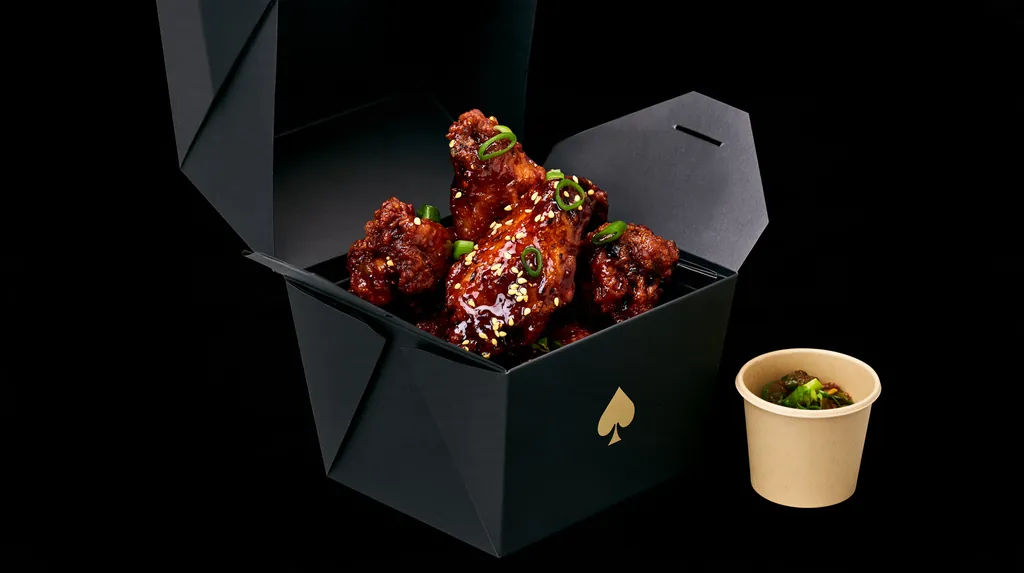
One standard fry, a fast pan finish and four sauces that taste nothing alike: Lucky Hot, Orange Fire, Sichuan Jackpot and Korean Fire. Crispy, glossy, sharp and packed straight away.
Menu price 9 wings $10 · Sides $3
Wings
Sides
Every Sous Chef recipe is designed without dairy, sesame, peanuts and tree nuts; items that contain wheat, egg, soy or mustard say so. Food is prepared by participating restaurant kitchens, so ingredients and cross-contact depend on the preparing restaurant. Customers with food allergies should contact the restaurant before ordering and should not rely solely on this ingredient information.
For restaurant partners
The operating pack.
You can see the operating requirements and estimated economics before you commit. One restaurant runs one Sous Chef brand; this is everything Jackpot Wings asks of it.
CHINESE RESTAURANTBest host restaurant
LOWLaunch complexity
NONENew equipment for a best-fit host
8–12 minTypical ticket
$3.20–$5.80Est. variable cost per main
$4.20–$6.80Est. contribution per main before platform fees
Why this brand
Nine wings for ten dollars in four sauces, built for a Chinese, Korean, Asian or American kitchen that already runs a fryer and already stocks soy, ginger, garlic, chiles and chicken. The Asian-leaning sauces fit that pantry, and wings are a different category from the host's own menu.
Flavor philosophy
Every flavor follows the same discipline: a standard fry for crisp skin, a quick pan finish so the sauce coats instead of drowning the wing, then acid and a fresh aromatic at the end. Lucky Hot is bright and garlicky, Orange Fire is citrus and caramel, Sichuan Jackpot is numbing and savory, Korean Fire is deep chile, ginger and umami.
Restaurant operations
01 What you need
A fry cook and a burner next to the fryer
The four sauces, the Jackpot seasoning and the garnishes prepped before service
Vented wing boxes, vented side boxes, side cups, labels, bags and extra napkins
02 Before service
Check the delivery storefront is online
Check fryer oil quality and temperature
Warm the four sauces gently and set them by the finishing burner in labeled squeeze bottles
Slice scallion and fresh chile, zest oranges
Par-cook and cool the potatoes; char the corn
Stock vented boxes, labels, bags and napkins
03 Batch prep
Every batch recipe for this brand, with yields and methods. Ingredients are shared within the brand to keep inventory small; nothing is shared with other brands.
Lucky Hot sauceAbout 16 orders of 1.5 oz
Batch yield
About 16 orders of 1.5 oz
Time
10 min active
Equipment
Range, Squeeze bottles
Used by
Lucky Hot
Batch recipe
1 cup cayenne-style hot sauce or blended fresh red chiles
½ cup honey
½ cup white vinegar
8 garlic cloves, grated
1 tbsp kosher salt
2 tbsp oil
Method
Sweat the garlic in oil without browning.
Add chile, honey, vinegar and salt; simmer 3 minutes until it lightly coats a spoon.
Cool, bottle, label and date.
Storage, shelf life and holding: follow your local health code and your restaurant's approved food-safety procedures. Label and date every batch.
Orange Fire sauceAbout 16 orders of 1.5 oz
Batch yield
About 16 orders of 1.5 oz
Time
15 min active
Equipment
Range
Used by
Orange Fire
Batch recipe
2 cups fresh orange juice
Zest of 2 oranges
6 dried chiles de árbol, crushed
8 garlic cloves, grated
½ cup honey
¼ cup white vinegar
2 tsp kosher salt
Method
Reduce orange juice by half.
Add chile, garlic, honey, vinegar and salt; simmer until syrupy.
Stir in zest off the heat. Cool, bottle, label and date.
Storage, shelf life and holding: follow your local health code and your restaurant's approved food-safety procedures. Label and date every batch.
Sichuan Jackpot sauceAbout 16 orders of 1.5 oz
Batch yield
About 16 orders of 1.5 oz
Time
15 min active
Equipment
Range, Spice grinder or mortar
Used by
Sichuan Jackpot
Batch recipe
3 tbsp Sichuan peppercorns, toasted and ground
10 dried red chiles, toasted and crushed
10 garlic cloves, minced
½ cup oil
½ cup rice vinegar
3 tbsp sugar
1 tbsp kosher salt
1 tsp MSG
Method
Toast peppercorns and chiles in a dry pan until fragrant; grind the peppercorns.
Warm the oil, add garlic and chile, cook until the garlic is pale gold.
Add vinegar, sugar, salt and MSG; simmer 1 minute; stir in half the ground Sichuan pepper.
Keep the rest of the ground pepper for finishing.
Storage, shelf life and holding: follow your local health code and your restaurant's approved food-safety procedures. Label and date every batch.
Korean Fire sauceAbout 16 orders of 1.5 oz
Batch yield
About 16 orders of 1.5 oz
Time
10 min active
Equipment
Range
Used by
Korean Fire
Batch recipe
⅓ cup gochugaru (Korean chile flakes)
⅔ cup soy sauce (or coconut aminos for a soy-free version)
¼ cup rice vinegar
¼ cup honey or sugar
2 tbsp grated ginger
8 garlic cloves, grated
2 tbsp oil
Method
Sweat garlic and ginger in oil.
Add gochugaru, soy sauce, vinegar and honey; simmer 2 minutes.
Cool, bottle, label and date. Store apart from the other sauces: this one contains soy and wheat.
Storage, shelf life and holding: follow your local health code and your restaurant's approved food-safety procedures. Label and date every batch.
Jackpot seasoningAbout 40 side portions
Batch yield
About 40 side portions
Time
5 min active
Equipment
Shaker
Used by
Jackpot Potatoes
Batch recipe
¼ cup kosher salt
2 tbsp garlic powder
2 tbsp smoked paprika
1 tbsp ground cayenne
1 tbsp sugar
1 tbsp black pepper
1 tsp citric acid or vinegar powder
Method
Mix. Store dry in a shaker.
Storage, shelf life and holding: follow your local health code and your restaurant's approved food-safety procedures. Label and date every batch.
Jackpot potatoesAbout 12 portions of 6 oz
Batch yield
About 12 portions of 6 oz
Time
10 min active, 12 min par-cook
Equipment
Fryer, Racks
Used by
Jackpot Potatoes
Batch recipe
5 lb russet potatoes, cut in thick wedges
Salt
Method
Par-boil or blanch-fry the wedges until just tender. Cool on racks.
Fry to order until deeply crisp.
Storage, shelf life and holding: follow your local health code and your restaurant's approved food-safety procedures. Label and date every batch.
Charred cornAbout 12 portions of 5 oz
Batch yield
About 12 portions of 5 oz
Time
10 min active
Equipment
Flat-top or sauté pan
Used by
Charred Corn
Batch recipe
4 lb corn kernels, thawed and dried
2 tbsp oil
Salt
Method
Char hard on a flat-top or in a very hot pan in batches. Cool.
Storage, shelf life and holding: follow your local health code and your restaurant's approved food-safety procedures. Label and date every batch.
04 During service
Fry 9 wings per order to the kitchen's standard crisp
Pan finish each order separately: never sauce wings in bulk
Package within a minute of saucing
Keep sauced wings and potatoes in separate vented boxes
05 Order assembly
Fry, drain and shake the basket
Hot sauté pan, sauce in, wings in, toss for about 15 seconds until glossy
Acid and aromatic off the heat
Straight into the vented box
06 Final finish
Lucky Hot: fresh sliced chile and a splash of vinegar
Orange Fire: fresh orange zest
Sichuan Jackpot: scallion and a pinch of ground Sichuan pepper
Korean Fire: scallion and a squeeze of lime
07 Packaging
Primary container
Vented wing box, 9 wings in a single layer where possible
Secondary container
Vented side box for potatoes; lidded cup for charred corn
Sauce
No sauce cups: every wing is sauced in the pan and the excess stays in the pan
Venting
Vents open on every box of fried food
Labeling
Flavor name on the label, for example "ORANGE FIRE"
Order identification
Order number and customer name from the ticket
Spill prevention
Tip the pan so excess sauce stays behind; no pooled sauce in the box
Crispy food
Never close fried food in a sealed container; pack boxes on top of the bag
08 Quality control
Skin crisp before saucing
Meat juicy, fully cooked
Sauce evenly distributed, not pooled
Acid present
Aromatics fresh and green
Packaged immediately
09 Cleanup
Filter fryer oil on your normal schedule
Wash the finishing pans between sauce flavors when switching from Korean Fire (soy) to another flavor
Wipe sauce bottles and store labeled and dated
10 Waste control
High-waste ingredients
Sliced scallion and fresh chile
Cut oranges
Sauced wings (cannot be resold)
Low-waste ingredients
Frozen wings
Dried chiles, Sichuan pepper and gochugaru
Honey, vinegar and soy
Batch prep
Make each sauce in small batches sized to a few days of pars, per your SOP
Slice garnishes twice a day
Expected leftover risks
Opened sauces at the end of their approved shelf life
Par-cooked potatoes at close
Ways to minimize waste
Only fry to order
Track which flavor sells and size its sauce batch to match
Keep the four sauces in squeeze bottles so the pan finish uses exactly 1.5 oz
About 8 to 10 min fry, depending on the kitchen's fryer and wing size
Active labor
About 1.5 to 2.5 minutes per order
Equipment
Deep fryer, Sauté pan, Range
Prep steps
Portion 9 wing pieces (about 14 oz raw) into a fry basket.
Have the sauce bottle, garnish and a clean sauté pan by the fryer.
Cooking steps
Fry at the kitchen's standard wing temperature until the skin is crisp and the wings are fully cooked. Cook proteins to the internal temperature required by your local health code and verify with a calibrated thermometer.
Drain and shake the basket well.
Assembly
Heat a sauté pan. Add 1.5 oz of sauce and let it bubble for a few seconds.
Add the wings and toss for about 15 seconds until every wing is glossy. Tip the pan so excess sauce stays behind.
Final finish
Off the heat, add a small splash of vinegar and the fresh sliced chile; toss once.
Packaging
Wings into a vented wing box in a single layer where possible. Vents open.
Label with the flavor, bag with extra napkins, hand off immediately.
Holding guidance
Hold hot and cold components at the temperatures and for the times set by your local health code and your restaurant's approved food-safety procedures. Label and date every batch. Discard according to your SOP.
Delivery performance
Delivery target
Designed to arrive hot, glossy and still crisp at the edges.
Expected texture after delivery
Skin is expected to soften somewhat under the sauce during delivery; the pan finish keeps the coating thin so it holds up better than bulk-tossed wings.
Sauce handling
Sauce is on the wings only. No sauce cups, no pooling.
Crispness
Vented box, never sealed; pack on top of the bag.
Heat retention
Expected to stay warm for a typical delivery window; depends on delivery time and the bag.
Leak risk
Low when the excess sauce stays in the pan.
Recommended packaging
Vented wing box, labeled, in a bag with extra napkins.
Quality control
Skin crisp before saucing
Meat juicy and fully cooked
Sauce evenly coats every wing, nothing pooled
Acid noticeable
Fresh chile slices visible
Boxed within a minute of saucing
Cleanup
Wipe or rinse the finishing pan between orders
Waste control
Sauce only to order; a sauced wing cannot be reused
Allergens
Contains
None of the major allergens
Designed without
Milk, Egg, Wheat, Soy, Fish, Shellfish, Peanuts, Tree Nuts, Sesame
Designed without the allergens listed. Purchased ingredients and shared equipment in the host kitchen can introduce cross-contact: verify with the preparing restaurant.
Cost breakdown by ingredient and packaging
Line
Portion
Est. cost
Chicken wings, split
14 oz
$2.10–$3.41
Fryer oil allowance, wings
portion
$0.15–$0.25
Honey
0.4 oz
$0.09–$0.12
Dried chiles and chile flakes
portion
$0.06–$0.12
Fresh herbs (cilantro, scallion, mint)
portion
$0.06–$0.12
Vented wing box
$0.22–$0.35
Order label
$0.02–$0.04
Delivery bag (per order)
$0.10–$0.20
Napkins (per order) × 2
$0.04–$0.08
JW-02Orange Fire
Nine crispy wings in a reduced orange, dried chile, garlic and honey glaze, finished with fresh orange zest. Citrus, sweet-tart and caramelized, with chile heat.
Flavor architecture
Salt
Salt in the glaze
Acid
Orange juice and vinegar
Fat
Crisp chicken skin
Umami
Caramelized glaze and fried chicken
Sweet
Reduced orange and honey
Heat
Chile de árbol
Texture
Sticky glaze over crisp skin
Aroma
Fresh orange zest
Menu price$10.00
Ingredient cost$2.50–$4.10
Packaging cost$0.35–$0.70
Incremental labor$0.40–$0.95
Total variable cost$3.25–$5.75
Contribution before platform fees$4.25–$6.75
Contribution margin before platform fees42%–68%
Illustrative estimate. Before delivery-platform fees and the Sous Chef 15% share.
About 8 to 10 min fry, depending on the kitchen's fryer and wing size
Active labor
About 1.5 to 2.5 minutes per order
Equipment
Deep fryer, Sauté pan, Range
Prep steps
Portion 9 wing pieces (about 14 oz raw) into a fry basket.
Have the sauce bottle, garnish and a clean sauté pan by the fryer.
Cooking steps
Fry at the kitchen's standard wing temperature until the skin is crisp and the wings are fully cooked. Cook proteins to the internal temperature required by your local health code and verify with a calibrated thermometer.
Drain and shake the basket well.
Assembly
Heat a sauté pan. Add 1.5 oz of sauce and let it bubble for a few seconds.
Add the wings and toss for about 15 seconds until every wing is glossy. Tip the pan so excess sauce stays behind.
Final finish
Off the heat, finish with fresh orange zest.
Packaging
Wings into a vented wing box in a single layer where possible. Vents open.
Label with the flavor, bag with extra napkins, hand off immediately.
Holding guidance
Hold hot and cold components at the temperatures and for the times set by your local health code and your restaurant's approved food-safety procedures. Label and date every batch. Discard according to your SOP.
Delivery performance
Delivery target
Designed to arrive hot, glossy and still crisp at the edges.
Expected texture after delivery
Skin is expected to soften somewhat under the sauce during delivery; the pan finish keeps the coating thin so it holds up better than bulk-tossed wings.
Sauce handling
Sauce is on the wings only. No sauce cups, no pooling.
Crispness
Vented box, never sealed; pack on top of the bag.
Heat retention
Expected to stay warm for a typical delivery window; depends on delivery time and the bag.
Leak risk
Low when the excess sauce stays in the pan.
Recommended packaging
Vented wing box, labeled, in a bag with extra napkins.
Quality control
Skin crisp before saucing
Meat juicy and fully cooked
Sauce evenly coats every wing, nothing pooled
Acid noticeable
Glaze caramelized, not runny
Zest fresh and fragrant
Boxed within a minute of saucing
Cleanup
Wipe or rinse the finishing pan between orders
Waste control
Sauce only to order; a sauced wing cannot be reused
Allergens
Contains
None of the major allergens
Designed without
Milk, Egg, Wheat, Soy, Fish, Shellfish, Peanuts, Tree Nuts, Sesame
Designed without the allergens listed. Purchased ingredients and shared equipment in the host kitchen can introduce cross-contact: verify with the preparing restaurant.
Cost breakdown by ingredient and packaging
Line
Portion
Est. cost
Chicken wings, split
14 oz
$2.10–$3.41
Fryer oil allowance, wings
portion
$0.15–$0.25
Orange, juice and zest
0.4
$0.11–$0.18
Honey
0.4 oz
$0.09–$0.12
Dried chiles and chile flakes
portion
$0.06–$0.12
Vented wing box
$0.22–$0.35
Order label
$0.02–$0.04
Delivery bag (per order)
$0.10–$0.20
Napkins (per order) × 2
$0.04–$0.08
JW-03Sichuan Jackpot
Nine crispy wings tossed with toasted Sichuan pepper, dried chile, garlic and vinegar, finished with scallion. Aromatic, numbing, hot and savory.
Flavor architecture
Salt
Salt and MSG in the sauce
Acid
Rice vinegar
Fat
Chile-garlic oil and crisp skin
Umami
MSG and toasted garlic
Sweet
A little sugar
Heat
Toasted dried chiles
Texture
Crisp skin with crunchy chile flakes
Aroma
Toasted Sichuan pepper and scallion
Menu price$10.00
Ingredient cost$2.50–$4.20
Packaging cost$0.35–$0.70
Incremental labor$0.40–$0.95
Total variable cost$3.25–$5.85
Contribution before platform fees$4.15–$6.75
Contribution margin before platform fees42%–68%
Illustrative estimate. Before delivery-platform fees and the Sous Chef 15% share.
About 8 to 10 min fry, depending on the kitchen's fryer and wing size
Active labor
About 1.5 to 2.5 minutes per order
Equipment
Deep fryer, Sauté pan, Range
Prep steps
Portion 9 wing pieces (about 14 oz raw) into a fry basket.
Have the sauce bottle, garnish and a clean sauté pan by the fryer.
Cooking steps
Fry at the kitchen's standard wing temperature until the skin is crisp and the wings are fully cooked. Cook proteins to the internal temperature required by your local health code and verify with a calibrated thermometer.
Drain and shake the basket well.
Assembly
Heat a sauté pan. Add 1.5 oz of sauce and let it bubble for a few seconds.
Add the wings and toss for about 15 seconds until every wing is glossy. Tip the pan so excess sauce stays behind.
Final finish
Off the heat, finish with sliced scallion and a pinch of ground Sichuan pepper.
Packaging
Wings into a vented wing box in a single layer where possible. Vents open.
Label with the flavor, bag with extra napkins, hand off immediately.
Holding guidance
Hold hot and cold components at the temperatures and for the times set by your local health code and your restaurant's approved food-safety procedures. Label and date every batch. Discard according to your SOP.
Delivery performance
Delivery target
Designed to arrive hot, glossy and still crisp at the edges.
Expected texture after delivery
Skin is expected to soften somewhat under the sauce during delivery; the pan finish keeps the coating thin so it holds up better than bulk-tossed wings.
Sauce handling
Sauce is on the wings only. No sauce cups, no pooling.
Crispness
Vented box, never sealed; pack on top of the bag.
Heat retention
Expected to stay warm for a typical delivery window; depends on delivery time and the bag.
Leak risk
Low when the excess sauce stays in the pan.
Recommended packaging
Vented wing box, labeled, in a bag with extra napkins.
Quality control
Skin crisp before saucing
Meat juicy and fully cooked
Sauce evenly coats every wing, nothing pooled
Acid noticeable
Numbing tingle noticeable
Scallion bright green
Boxed within a minute of saucing
Cleanup
Wipe or rinse the finishing pan between orders
Waste control
Sauce only to order; a sauced wing cannot be reused
Allergens
Contains
None of the major allergens
Designed without
Milk, Egg, Wheat, Soy, Fish, Shellfish, Peanuts, Tree Nuts, Sesame
Designed without the allergens listed. Purchased ingredients and shared equipment in the host kitchen can introduce cross-contact: verify with the preparing restaurant.
Cost breakdown by ingredient and packaging
Line
Portion
Est. cost
Chicken wings, split
14 oz
$2.10–$3.41
Fryer oil allowance, wings
portion
$0.15–$0.25
Sichuan peppercorn
portion
$0.10–$0.18
Dried chiles and chile flakes
portion
$0.06–$0.12
Fresh herbs (cilantro, scallion, mint)
portion
$0.06–$0.12
Cooking oil
portion
$0.04–$0.08
Vented wing box
$0.22–$0.35
Order label
$0.02–$0.04
Delivery bag (per order)
$0.10–$0.20
Napkins (per order) × 2
$0.04–$0.08
JW-04Korean Fire
Nine crispy wings in Korean chile, garlic, ginger and soy with rice vinegar and a touch of honey, finished with scallion. Deep chile, umami, ginger and heat.
Flavor architecture
Salt
Soy sauce
Acid
Rice vinegar and lime
Fat
Crisp skin and oil
Umami
Soy sauce
Sweet
A little honey
Heat
Gochugaru
Texture
Glossy sauce over crisp skin
Aroma
Ginger and scallion
Menu price$10.00
Ingredient cost$2.45–$4.10
Packaging cost$0.35–$0.70
Incremental labor$0.40–$0.95
Total variable cost$3.20–$5.75
Contribution before platform fees$4.25–$6.80
Contribution margin before platform fees42%–68%
Illustrative estimate. Before delivery-platform fees and the Sous Chef 15% share.
About 8 to 10 min fry, depending on the kitchen's fryer and wing size
Active labor
About 1.5 to 2.5 minutes per order
Equipment
Deep fryer, Sauté pan, Range
Prep steps
Portion 9 wing pieces (about 14 oz raw) into a fry basket.
Have the sauce bottle, garnish and a clean sauté pan by the fryer.
Cooking steps
Fry at the kitchen's standard wing temperature until the skin is crisp and the wings are fully cooked. Cook proteins to the internal temperature required by your local health code and verify with a calibrated thermometer.
Drain and shake the basket well.
Assembly
Heat a sauté pan. Add 1.5 oz of sauce and let it bubble for a few seconds.
Add the wings and toss for about 15 seconds until every wing is glossy. Tip the pan so excess sauce stays behind.
Final finish
Off the heat, finish with scallion and a squeeze of lime.
Packaging
Wings into a vented wing box in a single layer where possible. Vents open.
Label with the flavor, bag with extra napkins, hand off immediately.
Holding guidance
Hold hot and cold components at the temperatures and for the times set by your local health code and your restaurant's approved food-safety procedures. Label and date every batch. Discard according to your SOP.
Delivery performance
Delivery target
Designed to arrive hot, glossy and still crisp at the edges.
Expected texture after delivery
Skin is expected to soften somewhat under the sauce during delivery; the pan finish keeps the coating thin so it holds up better than bulk-tossed wings.
Sauce handling
Sauce is on the wings only. No sauce cups, no pooling.
Crispness
Vented box, never sealed; pack on top of the bag.
Heat retention
Expected to stay warm for a typical delivery window; depends on delivery time and the bag.
Leak risk
Low when the excess sauce stays in the pan.
Recommended packaging
Vented wing box, labeled, in a bag with extra napkins.
Quality control
Skin crisp before saucing
Meat juicy and fully cooked
Sauce evenly coats every wing, nothing pooled
Acid noticeable
Ginger noticeable
Deep red, glossy coating
Boxed within a minute of saucing
Cleanup
Wipe or rinse the finishing pan between orders
Waste control
Sauce only to order; a sauced wing cannot be reused
Allergens
Contains
Soy, Wheat
Designed without
Milk, Egg, Fish, Shellfish, Peanuts, Tree Nuts, Sesame
Designed without the allergens listed. Purchased ingredients and shared equipment in the host kitchen can introduce cross-contact: verify with the preparing restaurant.
Cost breakdown by ingredient and packaging
Line
Portion
Est. cost
Chicken wings, split
14 oz
$2.10–$3.41
Fryer oil allowance, wings
portion
$0.15–$0.25
Korean chile flakes (gochugaru)
portion
$0.08–$0.15
Soy sauce
portion
$0.03–$0.06
Garlic, ginger or lemongrass
portion
$0.04–$0.09
Fresh herbs (cilantro, scallion, mint)
portion
$0.06–$0.12
Vented wing box
$0.22–$0.35
Order label
$0.02–$0.04
Delivery bag (per order)
$0.10–$0.20
Napkins (per order) × 2
$0.04–$0.08
JW-05Jackpot Potatoes
Thick potato wedges fried extra crisp and shaken hot in Jackpot seasoning: salt, garlic, smoked paprika, cayenne, pepper and a tang of citric acid.
Flavor architecture
Salt
Jackpot seasoning
Acid
Citric acid in the seasoning
Fat
Fryer oil
Umami
Browned potato
Sweet
A little sugar
Heat
Cayenne
Texture
Crackling crust, fluffy center
Aroma
Garlic and smoked paprika
Menu price$3.00
Ingredient cost$0.35–$0.70
Packaging cost$0.10–$0.20
Incremental labor$0.20–$0.50
Total variable cost$0.65–$1.40
Contribution before platform fees$1.60–$2.35
Contribution margin before platform fees53%–78%
Illustrative estimate. Before delivery-platform fees and the Sous Chef 15% share.
Shake in a dry steel bowl with 1 tsp Jackpot seasoning.
Final finish
Taste one: it should be salty, tangy and hot.
Packaging
Vented side box, vents open, packed beside the wings.
Holding guidance
Hold hot and cold components at the temperatures and for the times set by your local health code and your restaurant's approved food-safety procedures. Label and date every batch. Discard according to your SOP.
Delivery performance
Delivery target
Designed to arrive crisp at the edges.
Expected texture after delivery
Expected to soften somewhat; thick wedges hold better than thin fries.
Sauce handling
No sauce.
Crispness
Vented box; do not stack under the wings.
Heat retention
Warm on a typical delivery; depends on delivery time.
Leak risk
None.
Recommended packaging
Vented side box in the wing bag.
Quality control
Deep golden
Evenly seasoned
Crisp when shaken
Cleanup
Wash the seasoning bowl at shift change
Waste control
Par-cook in two batches on slow days
Allergens
Contains
None of the major allergens
Designed without
Milk, Egg, Wheat, Soy, Fish, Shellfish, Peanuts, Tree Nuts, Sesame
Designed without the allergens listed. Purchased ingredients and shared equipment in the host kitchen can introduce cross-contact: verify with the preparing restaurant.
Cost breakdown by ingredient and packaging
Line
Portion
Est. cost
Potatoes, raw
7.5 oz
$0.26–$0.42
Salt, pepper and dried spices
portion
$0.04–$0.09
Fryer oil allowance
portion
$0.08–$0.15
Vented side box
$0.10–$0.16
JW-06Charred Corn
Hard-charred corn tossed with lime, chile, salt and scallion. No cheese, no cream.
Flavor architecture
Salt
Salt
Acid
Lime
Fat
A little oil from charring
Umami
Deep char on the corn
Sweet
Sweet corn
Heat
Ground chile
Texture
Chewy, blistered kernels
Aroma
Char and scallion
Menu price$3.00
Ingredient cost$0.55–$0.95
Packaging cost$0.10–$0.25
Incremental labor$0.10–$0.40
Total variable cost$0.75–$1.60
Contribution before platform fees$1.40–$2.25
Contribution margin before platform fees47%–75%
Illustrative estimate. Before delivery-platform fees and the Sous Chef 15% share.
Hold hot and cold components at the temperatures and for the times set by your local health code and your restaurant's approved food-safety procedures. Label and date every batch. Discard according to your SOP.
Delivery performance
Delivery target
Designed to arrive warm.
Expected texture after delivery
Kernels stay chewy and blistered.
Sauce handling
No sauce.
Crispness
Not a crisp item.
Heat retention
Warm; depends on delivery time.
Leak risk
Low.
Recommended packaging
Lidded side container in the wing bag.
Quality control
Visible char on most kernels
Bright lime
Cleanup
Scrape the flat-top after charring
Waste control
Char once a day; frozen corn keeps
Allergens
Contains
None of the major allergens
Designed without
Milk, Egg, Wheat, Soy, Fish, Shellfish, Peanuts, Tree Nuts, Sesame
Designed without the allergens listed. Purchased ingredients and shared equipment in the host kitchen can introduce cross-contact: verify with the preparing restaurant.
Illustrative estimate. Actual costs vary by supplier, market, portion size, labor rates, waste, packaging and restaurant operation. Contribution is before delivery-platform fees and before the Sous Chef 15% share of net delivery sales. How we estimate costs.
Brand economics
$10.00Average main price
$2.45–$4.15Food cost range
$0.35–$0.70Packaging range
$0.40–$0.95Incremental labor range
$3.20–$5.80Variable cost range
$4.20–$6.80Contribution before platform fees
Illustrative scenario
Scenario
Daily gross sales
Monthly gross sales (30 days)
Est. monthly variable costs
Est. monthly contribution before platform fees
10 orders a day
$100.00
$3,000
$960–$1,740
$1,260–$2,040
25 orders a day
$250.00
$7,500
$2,400–$4,350
$3,150–$5,100
50 orders a day
$500.00
$15,000
$4,800–$8,700
$6,300–$10,200
Daily gross sales
Monthly gross sales
Est. monthly variable costs
Est. monthly contribution before platform fees
ILLUSTRATIVE SCENARIO. Each order is assumed to be one main at the brand's average price; sides would add sales and cost. These are not forecasts: Sous Chef does not know and does not promise how many orders any restaurant will receive. Results depend on local demand, order volume, capacity, labor, ingredient costs, platform fees, pricing, waste and execution.
Launch cost
One-time launch costs
Item
Estimate
Notes
Initial ingredient inventory
$160–$320
Wings (a case), potatoes, corn, sauces and garnishes.
Initial packaging stock
$110–$220
Vented wing boxes, vented side boxes, side cups, labels, bags, napkins.
Labels and print
$25–$60
Order labels and a sauce station card.
Training
$50–$150
About 2 staff hours plus a manager walkthrough, plus test wings.
Optional small equipment
$0–$60
Squeeze bottles and a dedicated finishing pan if not owned.
Estimated launch cost
$345–$810
Ongoing costs
Ingredients: $2.45–$4.15 per average main
Packaging: $0.35–$0.70 per order
Incremental labor: $0.40–$0.95 per order
Delivery-platform commission and fees, per your agreement with the platform
Sous Chef share: 15% of net delivery sales, invoiced monthly
No setup fee, subscription or minimum
Equipment required
Commercial deep fryer
Range with a sauté pan for the finish
Refrigeration or freezer
Prep table
Optional equipment
Flat-top for charring corn (a sauté pan also works)
Squeeze bottles for the four sauces
What a best-fit host probably already owns
Commercial fryer
Range and sauté pans
Refrigeration and freezer
Prep table
Illustrative estimate. Actual costs vary by supplier, market, portion size, labor rates, waste, packaging and restaurant operation.
Host restaurant fit
Best fit
Chinese restaurant
Korean restaurant
Asian restaurant
American restaurant with a fryer
Sports bar
Good fit
Burger restaurant
Pub
Thai or Vietnamese restaurant with a fryer
Poor fit
Wing restaurant (the menus overlap)
Kitchen without a commercial fryer
Cafe or bakery
An Asian kitchen already owns a fryer, fries chicken, stocks soy, ginger, garlic, dried chiles, Sichuan pepper and scallions, and runs takeout and delivery. Sichuan Jackpot and Korean Fire use its pantry directly.
Existing equipment likely available
Commercial fryer
Wok or range with sauté pans
Refrigeration and freezer
Prep table
Existing ingredients likely available
Chicken
Soy sauce
Ginger
Garlic
Scallions
Dried chiles
Rice vinegar
Honey or sugar
Oranges
Potatoes (American hosts)
New ingredients required
Chicken wings (if not stocked)
Gochugaru (if not stocked)
Sichuan peppercorns (if not stocked)
Corn kernels
Potatoes (Asian hosts)
New equipment required
None
New prep required
Four small sauce batches
Jackpot seasoning
Par-cooked potato wedges
Charred corn
Storage requirement
Freezer or cooler space for wings, a half-sheet of refrigerated space for four labeled sauce bottles, one third-pan for garnishes.
Training requirement
About 2 hours for a fry or wok cook: the four sauces, the 15-second pan finish and the packing standard.
Estimated launch complexity
LOW. It is a fryer and a sauté pan. The new work is four sauces and the pan-finish discipline.
Packaging
Primary container
Vented wing box, 9 wings in a single layer where possible
Secondary container
Vented side box for potatoes; lidded cup for charred corn
Sauce container
No sauce cups: every wing is sauced in the pan and the excess stays in the pan
Venting
Vents open on every box of fried food
Labeling
Flavor name on the label, for example "ORANGE FIRE"
Order identification
Order number and customer name from the ticket
Spill prevention
Tip the pan so excess sauce stays behind; no pooled sauce in the box
Crispy-food handling
Never close fried food in a sealed container; pack boxes on top of the bag
Estimated packaging per order: $0.35–$0.70 for a main with its bag, napkins and utensils. A side adds only its container. No custom packaging or stickers are required at launch.
Allergens and food safety
Item
Wheat
Egg
Soy
Mustard
Milk
Lucky Hot
—
—
—
—
—
Orange Fire
—
—
—
—
—
Sichuan Jackpot
—
—
—
—
—
Korean Fire
Contains
—
Contains
—
—
Jackpot Potatoes
—
—
—
—
—
Charred Corn
—
—
—
—
—
Every item is designed without dairy, sesame, peanuts and tree nuts unless it says “may contain”. That is a recipe design, not an allergy-safe claim: purchased ingredients and shared equipment in the host kitchen can introduce cross-contact. Verify every label.
Sous Chef provides
Recipes
Preparation instructions
Allergen information
Operational documentation
Quality standards
The host restaurant remains responsible for
Local health code
Food temperatures
Employee hygiene
Cross-contact prevention
Storage
Sanitation
Approved food-safety procedures
HACCP where applicable
Follow applicable local health code and your restaurant's approved food-safety procedures. Sous Chef does not publish holding times or holding temperatures.
Brand FAQ
Do I need a sauce warmer?
No. Sauces sit in squeeze bottles at the station and are heated in the pan with each order.
Are the wings breaded?
No. They are a standard naked fry, so the wings themselves contain no wheat. Korean Fire contains soy sauce, which contains wheat and soy.
Can I use my own wing sauce?
No. The four Jackpot sauces are the brand. Your own sauces stay on your own menu.
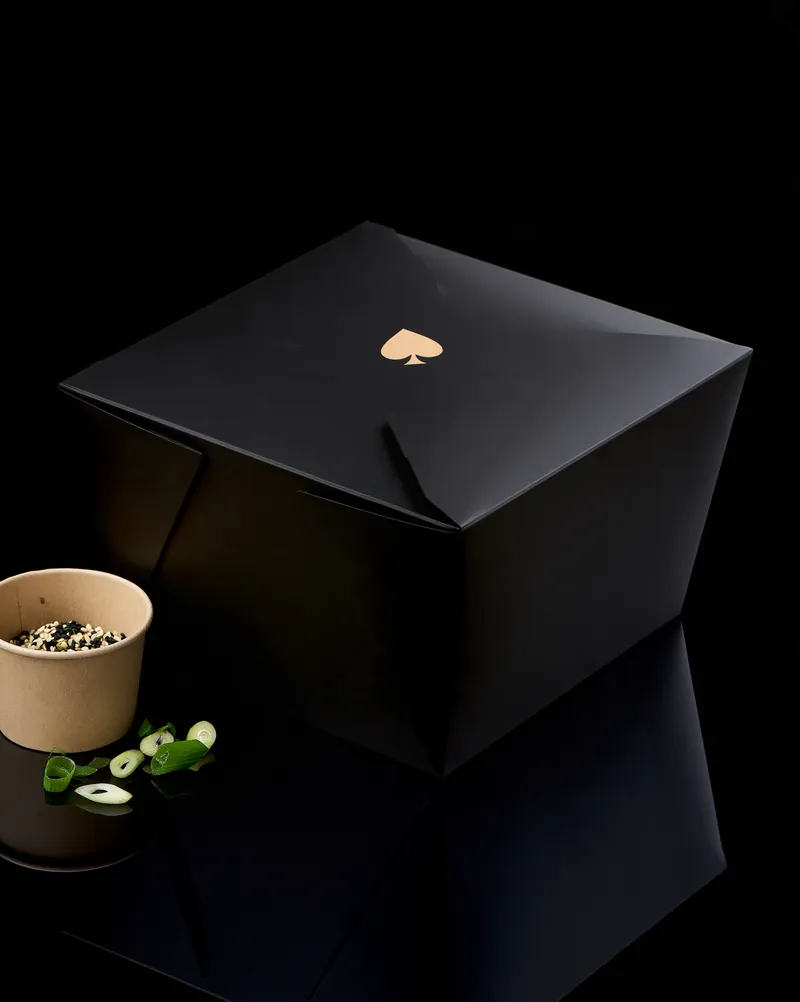
Jackpot Wings launches in high-quality generic delivery packaging: securely closed, vented where needed, leak-resistant and without unnecessary plastic. No custom packaging or Sous Chef stickers are required at launch. The photograph shows the branded packaging direction.